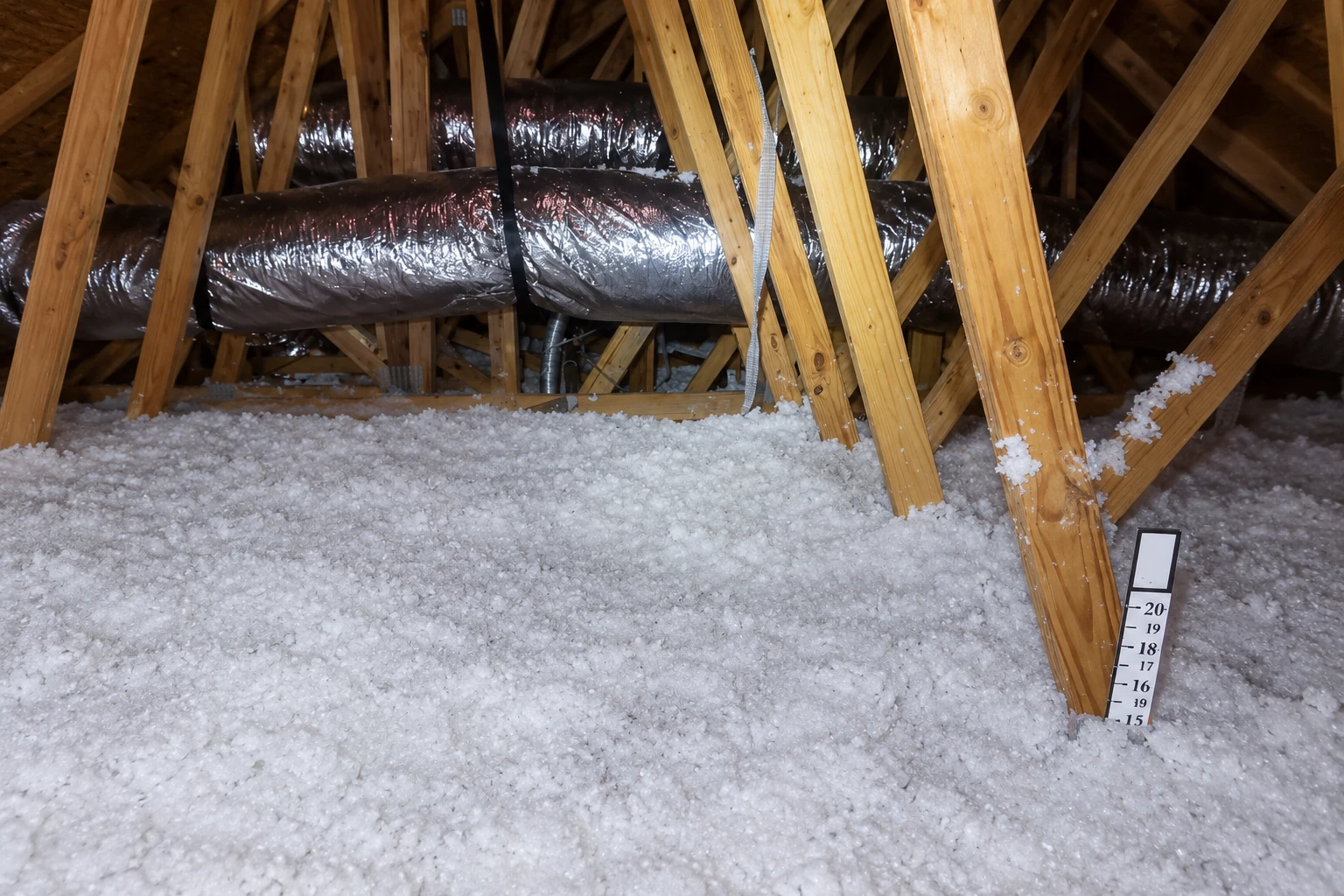
A thin layer from years back
Plenty of attics around Charleston still have the few inches the builder left, packed down over the years. That's a common reason we get called, and it's usually a simple top-up.
If the upstairs runs hot and the power bill keeps climbing, a thin attic floor is often why. We fill it evenly to the edges.
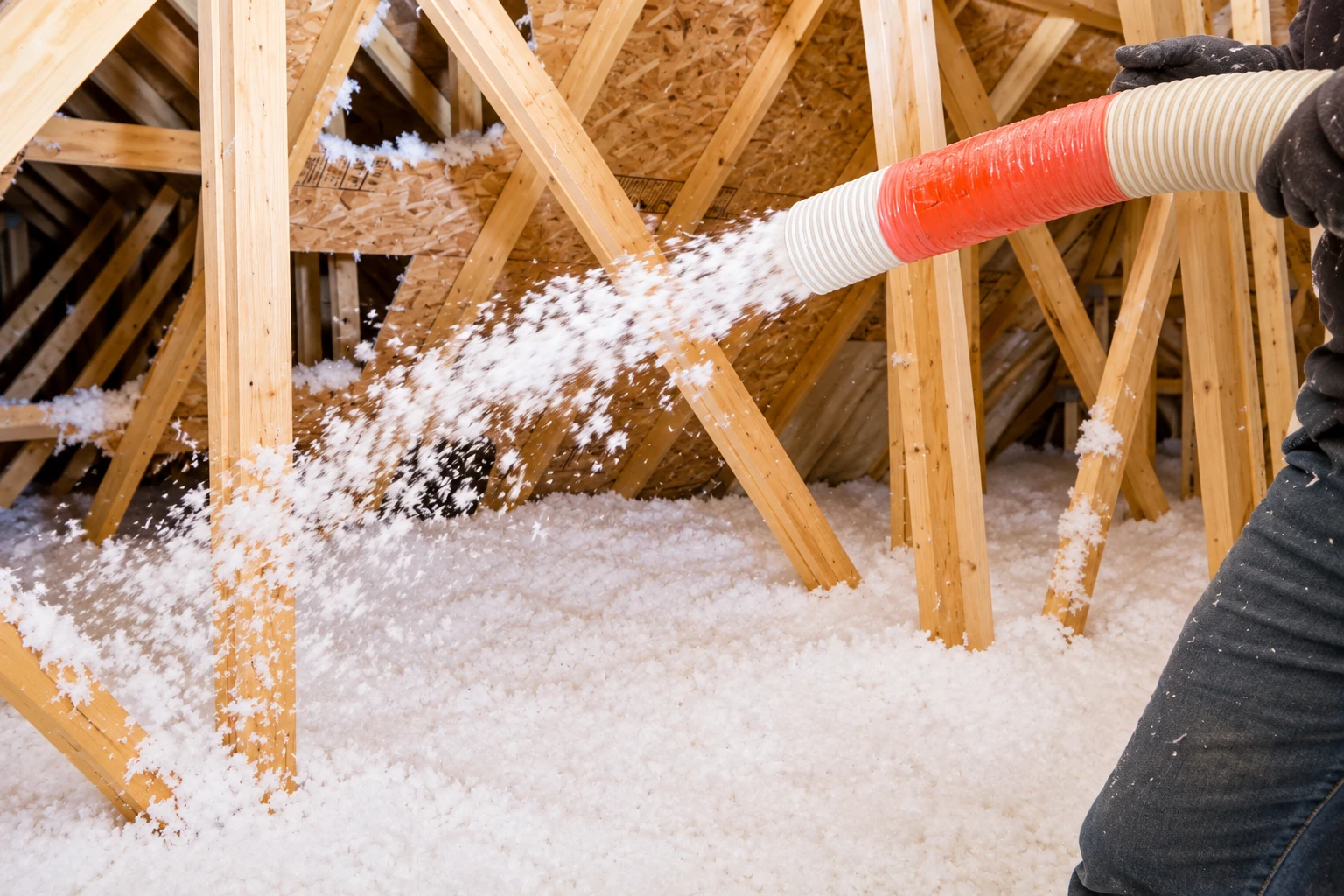
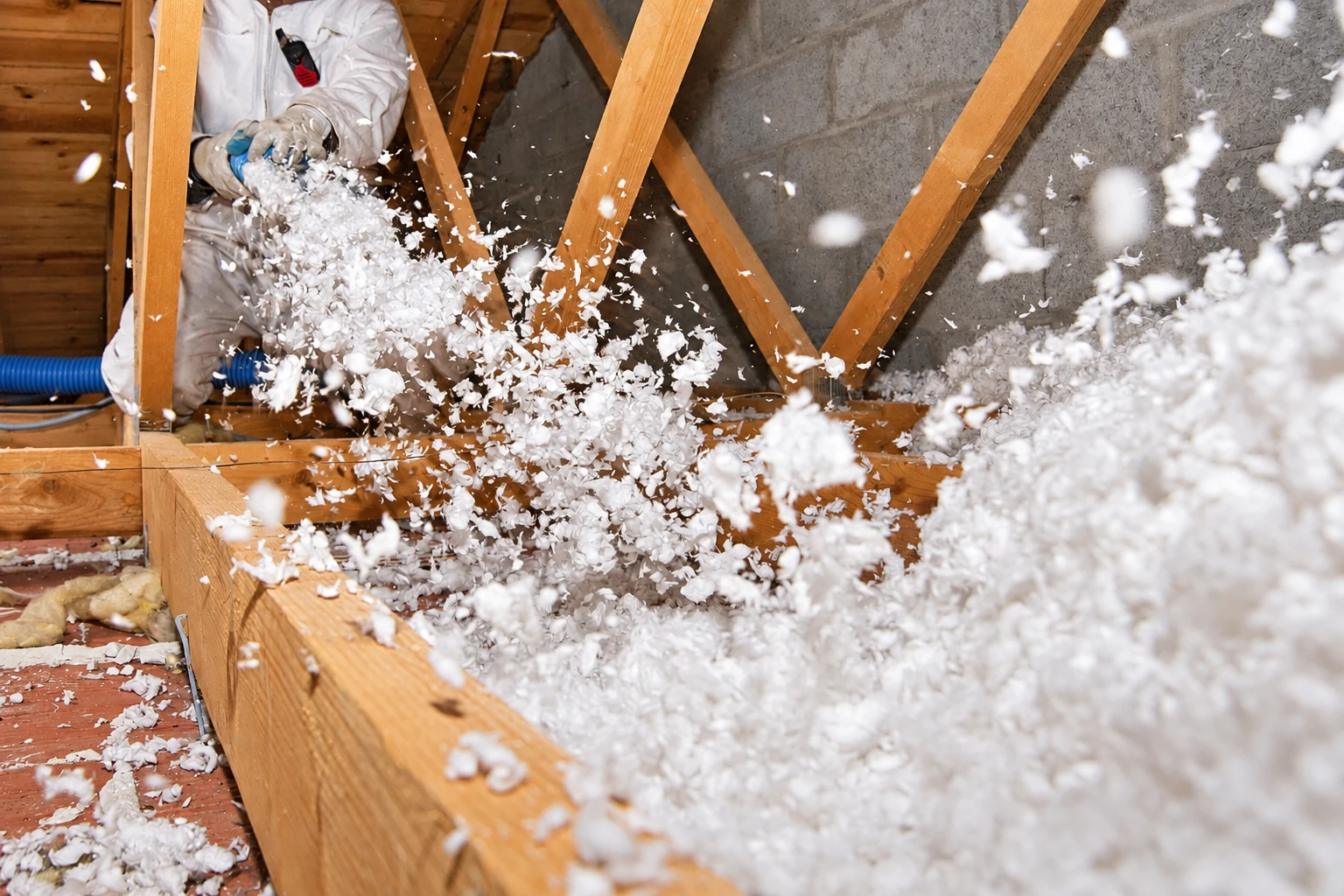
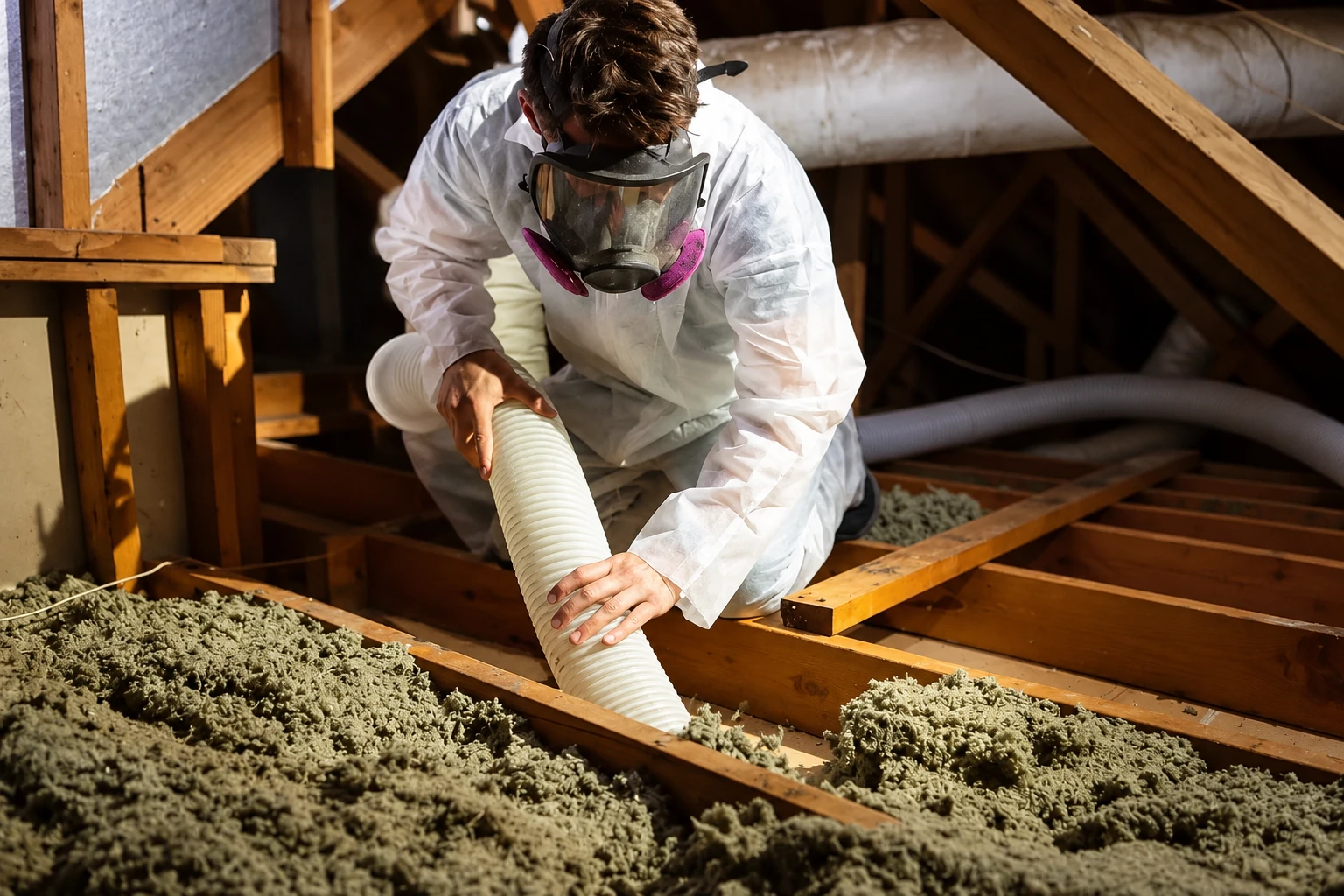
Blown-in insulation is loose fill, usually cellulose or fiberglass, blown through a hose across your attic floor so it slows the heat coming through your ceiling. For most open attics in Charleston, it's the simplest way to get a full, even layer.
The price mostly turns on how big the attic is, how many inches are already up there and what has to happen before we blow anything in, like sealing gaps, boxing in lights or pulling out a bad layer. The schedule turns on that same prep, plus a permit if your job needs one, and your written quote lists each step so you can see where the time and money go.
We're licensed and insured, and South Carolina's licensing rules count insulation as a residential specialty trade once a job runs over $500, so it's worth asking about on every quote you're comparing. We're based in Charleston and work across the cities around it, in older houses with low, tight attics and newer ones with wide open floors.
I started this business in 2023 so the person who explains your job also answers for it. I do the estimate and come back at the end to look it over with you.
I spent years on the selling side, and I'd rather lose a sale than talk you into work you don't need. Some attics only need a top-up, and I'll tell you so.
When we leave, you should know what's up there, how deep it is and why we did each step, so the next quote you get won't be a mystery to you.
Blown-in is often the sensible choice for an open attic floor, and the job starts with what's already up there. I look at the old layer on the estimate, and if it has to come out first, that's insulation removal, listed on your quote as its own step so nothing gets blown over a problem.
Next our crew does the air sealing, closing the gaps around can lights, pipes and the attic hatch, because insulation laid over an open gap ends up fighting a draft. Then we set baffles, short guides at the eaves, so the vents stay clear and the attic keeps breathing, since buried vents are how moisture ends up in the framing.
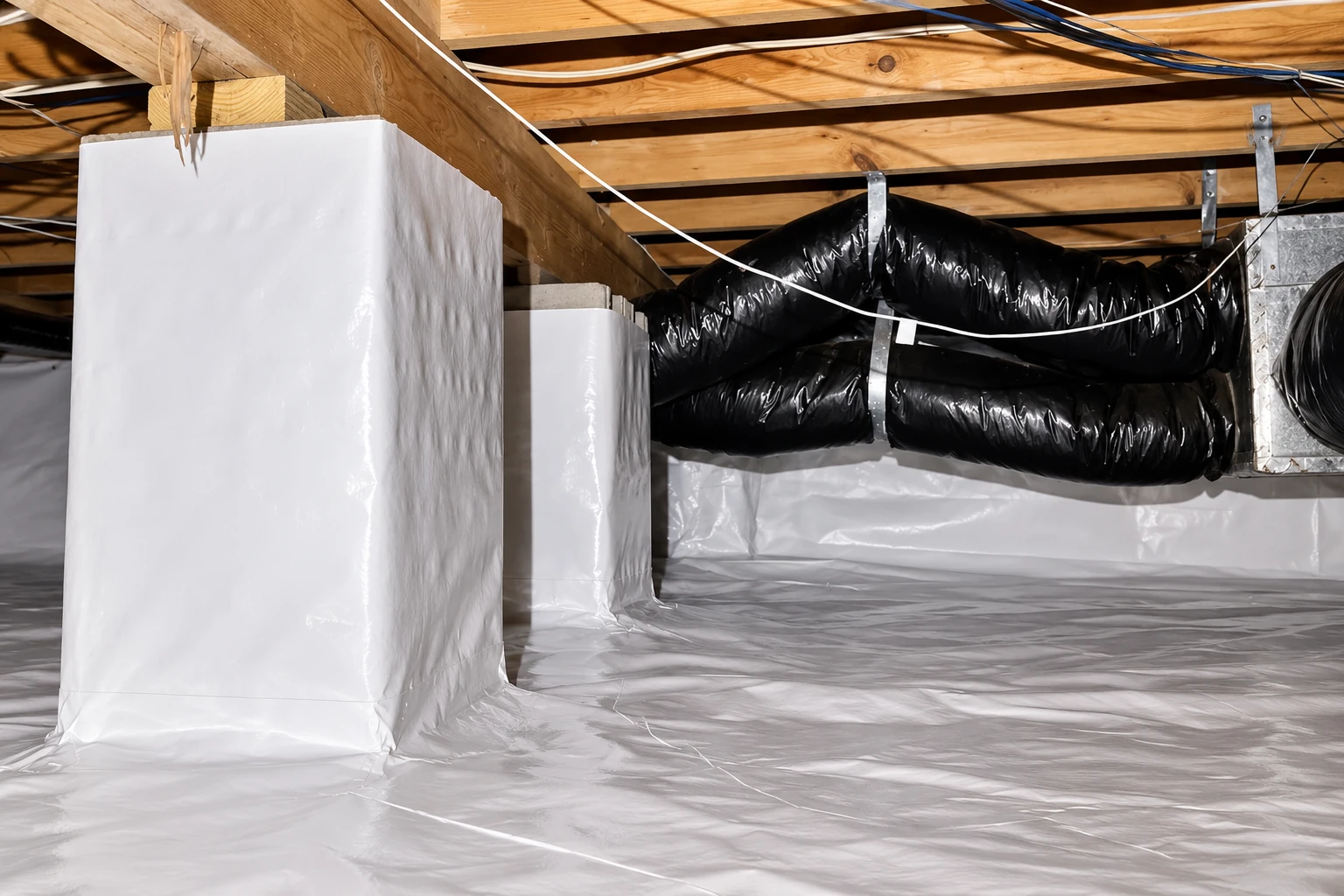
When we blow, we aim for an even layer that reaches all the way out to the edges, because the usual mistake is deep in the middle and thin where the roof meets the walls. If your ductwork runs through the attic, foam can be worth its higher price since it seals and insulates at once, but for most attics, sealing the gaps and topping up loose fill is the better buy. If the walls or crawl space are part of the problem too, I'll say so, and we can look at the whole house as home insulation.
Plenty of attics around Charleston still have the few inches the builder left, packed down over the years. That's a common reason we get called, and it's usually a simple top-up.
When the upstairs runs hot all summer while downstairs feels fine, the attic floor right above those rooms is usually the first place I look, and often where the layer is thinnest.
That room often sits under its own small attic that earlier crews missed or skimped on. We check it separately, because cold floors or a hot ceiling there usually trace back to thin coverage.
Once a damaged layer has been cleared out, the bare attic floor is the easiest place to get blown-in right, with the gaps sealed and baffles set before anything goes down.
Send the form and we'll reply within one business day, by phone or email. Then I come out, look at the attic myself and leave you a written quote, free and with no obligation.
Put your address on the form, plus anything you've noticed up there, like recessed lights, old wiring or the kind of insulation, so I know what to look for.
I come out, go up in the attic and explain what I find in plain words, so you're not left trying to decode a sales sheet after I've gone.
Your quote lists each step, including any prep that has to come first, which makes it easy to line up against the other quotes you already have.
These photos show the kinds of attic floors, depths and baffle layouts worth talking through when I come out to look at yours.
These are the questions I hear most on attic estimates around Charleston, about cost, safety checks, old insulation and permits.
Usually, yes. Federal energy guidance says blowing loose fill across an attic floor usually costs less than laying batts, the precut blankets, and covers better, though installed prices vary. That holds for fiberglass, rock wool and cellulose, so when you compare quotes, a lower blown-in bid isn't automatically a corner being cut.
Attic insulation in Charleston usually costs about $1,400 to $4,500 per job, and that's the going rate around here, not our price. Where your attic lands turns on its size, what's already up there and the prep, and your written estimate breaks each of those out as its own step.
Old wiring and old insulation get checked first. A best-practice checklist holds insulation until active knob and tube wiring, the old exposed kind, is replaced or boxed, and stops work if the attic has vermiculite, an older fill that may contain asbestos. The same list covers leaks, moisture, pest damage and boxing in recessed lights not rated for insulation contact.
Usually, yes. A national homeowner guide says dirty insulation is still fine to keep, with no need to pull it out, and blown insulation can be raked back level after the gaps are sealed. Insulation that's been soaked or is full of droppings is a different call, because covering it just buries the problem.
Inside city limits, Charleston's Development and Construction Services answers permit questions at 843-577-5550, once you've confirmed your address on the city's map. If your address isn't on it, the Charleston County or Berkeley County map tells you which office handles it. Before we quote, we check which office covers you, and if a permit is needed, we handle it and keep you posted.
Call (843) 278-0544 any day, 7 AM to 10 PM, or send the form, and I'll come see what your attic needs.